


Prostatitisis an inflammatory disease of the prostate gland.It appears as frequent urination, pain in the penis, scrotum, rectum, sexual disorders (erectile dysfunction, premature ejaculation, etc.), sometimes urinary retention and blood in the urine.The diagnosis of prostatitis is made by a urologist or andrologist based on a typical clinical picture and the results of a rectal examination.In addition, an ultrasound of the prostate and culture of prostatic secretions and urine is performed.Treatment is conservative - antibacterial therapy, immunotherapy, prostate massage, lifestyle correction.
General information
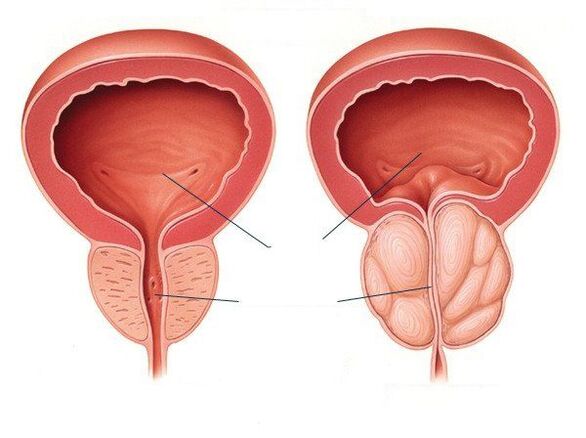
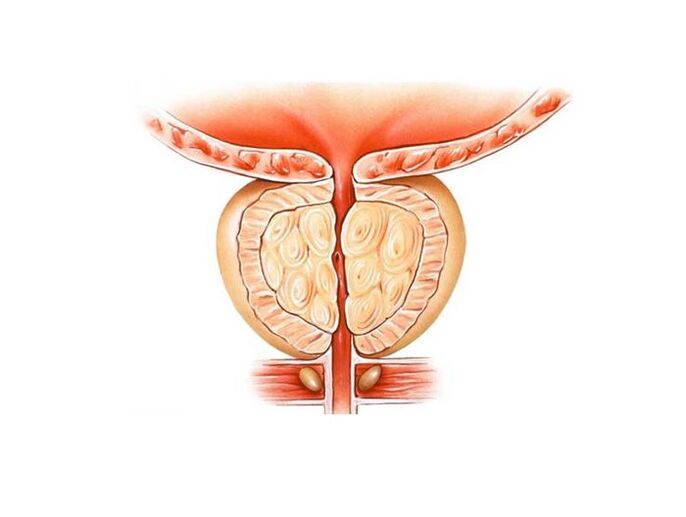
Prostatitis is inflammation of the seminal gland (prostate) - the prostate.It is the most common disease of the genitourinary system in men.It most often affects patients aged 25-50 years.According to various data, prostatitis affects 30-85% of men over 30 years old.Possible formation of abscess of the prostate gland, inflammation of the testicles and appendages, which threatens infertility.Growing infection leads to inflammation of the upper parts of the genitourinary system (cystitis, pyelonephritis).
The pathology develops with the penetration of an infectious agent that enters the prostate tissue from the organs of the genitourinary system (urethra, bladder) or from a distant inflammatory focus (pneumonia, flu, sore throat, furunculosis).
Causes of prostatitis
Staphylococcus aureus, Enterococcus, Enterobacter, Pseudomonas, Proteus, Klebsiella and E. Coli can act as infectious agents in acute cases.Most microorganisms belong to conditionally pathogenic flora and cause prostatitis only in the presence of other predisposing factors.Chronic inflammation is usually due to polymicrobial associations.
The risk of developing the disease increases with hypothermia, a history of specific infections and conditions associated with congestion in the prostate tissue.The following predisposing factors have been identified:
- General hypothermia (one-time or permanent, related to working conditions).
- A sedentary lifestyle, an occupation that forces a person to be in a sitting position for a long time (computer operator, driver, etc.).
- Persistent constipation.
- Disturbances in the normal rhythm of sexual activity (excessive sexual activity, prolonged abstinence, incomplete ejaculation during "ordinary" sexual intercourse without emotional overtones).
- The presence of chronic diseases (cholecystitis, bronchitis) or chronic infectious foci in the body (chronic osteomyelitis, untreated caries, tonsils, etc.).
- Past urological diseases (urethritis, cystitis, etc.) and sexually transmitted diseases (chlamydia, trichomoniasis, gonorrhea).
- Conditions that cause suppression of the immune system (chronic stress, irregular and poor nutrition, regular lack of sleep, overtraining in athletes).
A decisive role in the occurrence of prostatitis is played by congestion in the prostate tissue.Interruption of capillary blood circulation causes increased lipid peroxidation, swelling, exudation of prostate tissue and creates conditions for the development of an infectious process.
Symptoms of prostatitis
Acute prostatitis
There are three stages of acute prostatitis, which are characterized by the presence of a certain clinical picture and morphological changes:
- Acute catarrh.Patients complain of frequent, often painful urination, pain in the sacrum and perineum.
- Acute follicular.The pain becomes more intense, sometimes radiates to the anus and intensifies during defecation.Urination is difficult, urine flows in a thin stream.In some cases, urinary retention is observed.Low-grade fever or moderate hyperthermia is typical.
- Acute parenchymal.Severe general intoxication, hyperthermia up to 38-40°C, chills.Dysuric disorders, often acute urinary retention.Sharp, throbbing pain in the perineum.Difficulty in defecation.
Chronic prostatitis
In rare cases, chronic prostatitis becomes the result of an acute process, however, as a rule, a mainly chronic course is observed.The temperature occasionally rises to subfebrile levels.The patient notices slight pain in the perineum, discomfort during urination and defecation.The most characteristic symptom is a small flow from the urethra during defecation.The mostly chronic form of the disease develops over a considerable period of time.It is preceded by prostatosis (blood stagnation in capillaries), which gradually turns into abacterial prostatitis.
Chronic prostatitis is often a complication of the inflammatory process caused by the causative agent of a specific infection (chlamydia, trichomonas, ureaplasma, gonococcus).Symptoms of a specific inflammatory process in many cases mask the manifestations of prostate damage.There may be a slight increase in pain during urination, slight pain in the perineum, scanty discharge from the urethra during defecation.A small change in the clinical picture often goes unnoticed by the patient.
Chronic inflammation of the prostate gland can manifest with a burning sensation in the urethra and perineum, dysuria, sexual dysfunction and increased general fatigue.The consequence of potency disorders (or the fear of these disorders) is often mental depression, anxiety and nervousness.The clinical framework does not always include all the listed groups of symptoms;it varies between different patients and changes over time.There are three main syndromes characteristic of chronic prostatitis: pain, dysuria, sexual disorders.
There are no pain receptors in prostate tissue.The cause of pain in chronic prostatitis is the almost inevitable involvement of nerve pathways in the inflammatory process due to the abundant innervation of the pelvic organs.Patients complain of pain of varying intensity - from light, painful sleep to intense and disturbing sleep.There is a change in the nature of the pain (increasing or weakening) during ejaculation, excessive sexual activity or sexual abstinence.The pain radiates to the scrotum, sacrum, perineum and sometimes to the lumbar region.
As a result of inflammation in chronic prostatitis, the volume of the prostate increases, compressing the urethra.The lumen of the ureter is reduced.The patient experiences a frequent urge to urinate and a feeling of incomplete emptying of the bladder.As a rule, dysuric phenomena are expressed in the early stages.Then compensatory hypertrophy of the muscular layer of the bladder and ureters develops.Symptoms of dysuria weaken during this period and then increase again with the decompensation of adaptation mechanisms.
In the initial stages, dyspotency may develop, which appears differently in different patients.Patients may complain of frequent erections at night, loss of orgasm or worsening erection.Accelerated ejaculation is associated with a decrease in the level of the threshold of excitation of the orgasmic center.Pain during ejaculation can cause rejection of sexual activity.Then, sexual dysfunctions become more pronounced.In an advanced stage, impotence develops.
The degree of sexual disorder is determined by many factors, including the sexual constitution and psychological mood of the patient.Impaired potency and dysuria can be caused both by changes in the prostate gland and by the suggestibility of the patient, who, if diagnosed with chronic prostatitis, awaits the inevitable development of sexual disorders and urinary disorders.Psychogenic dyspotency and dysuria develop especially often in suggestible and anxious patients.
Impotence, and sometimes the very threat of possible sexual disorders, is difficult for patients to tolerate.Often there is a change in character, irritability, anger, excessive concern for one's health, even "sickness".
Distribution
In modern urology there is no uniform classification of the disease.However, practicing doctors prefer this option for the classification of the inflammatory process in the prostate:
According to the course of the disease:
- Acute prostatitis.It accounts for more than 50% of cases of the disease in people no older than 30-35 years old.
- Chronic option.It is considered a non-age category.It does not manifest for a long time;the impetus for its development is a cold or infection.
For the reason that caused the pathology:
- Bacterial inflammation of the prostate gland, prevalent in men under 40 years of age, appears against the background of ultrasound and does not extend beyond the boundaries of the organ.
- Non-bacterial pathological changes in the gland, mostly chronic.
- Viral inflammation of the prostate is characterized by an acute course that affects the entire genital area.
According to the nature of the structural changes in the prostate gland:
- Fibrous prostatitis is characterized by rapid irreversible growth of the gland and requires radical intervention.Clinically it resembles prostate adenoma.
- Calculous inflammation of the prostate gland occurs due to the formation of stones within the prostate.It is considered a harbinger of cancer.
- Congestive prostatitis, the result of a sedentary lifestyle, is diagnosed in every second patient.
Signs of illness
If a man detects at least two of the following symptoms of prostatitis, he should immediately contact a qualified specialist:
- Urinary disorder with the appearance of a constant, weak stream of urine, extremely short, causing splashing, difficulty and pain before urination.The frequent urge to empty the bladder occurs mainly at night.
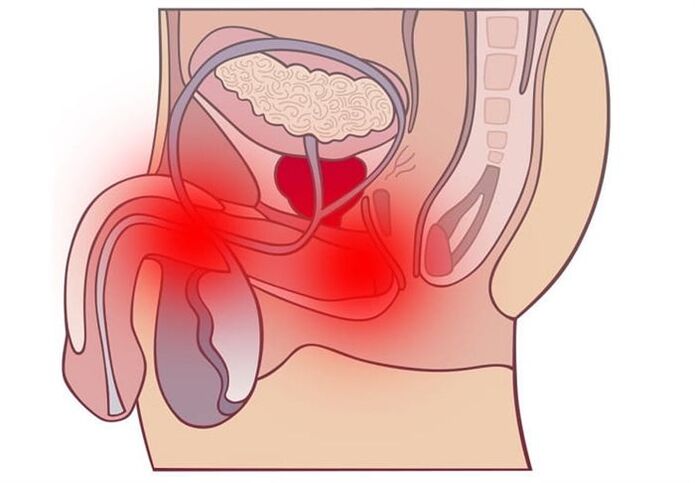
- The pain, which is located in the lower abdomen, radiates to the scrotum, perineum and rectum.
- Sexual dysfunction.
- Problems with ejaculation, changes in sperm (consistency, quantity).
Complications
In the absence of timely treatment of acute prostatitis, there is a significant risk of developing a prostate abscess.When a purulent focus is formed, the patient's body temperature rises to 39-40 ° C and can become febrile in nature.Periods of fever alternate with severe chills.Sharp pain in the perineum makes urination difficult and defecation impossible.
Increased swelling of the prostate gland leads to acute urinary retention.In rare cases, the abscess spontaneously bursts into the urethra or rectum.When opened, purulent, cloudy urine with an unpleasant and pungent odor appears in the urethra;when opened, the stool contains pus and mucus in the rectum.
Chronic prostatitis is characterized by a wave-like course with periods of long remissions, during which the inflammation in the prostate is latent or manifests itself with extremely few symptoms.Patients who are not bothered by anything often stop treatment and return only if complications develop.
The spread of infection along the urinary tract causes the appearance of pyelonephritis and cystitis.The most common complication of the chronic process is inflammation of the testicles and epididymis (epdidymo-orchitis) and inflammation of the seminal vesicles (vesiculitis).The result of these diseases is often infertility.
Diagnosing
The characteristic clinical picture simplifies the process of diagnosing acute and chronic prostatitis.It is mandatory that:
Treatment of prostatitis
Treatment of acute prostatitis
Patients with an uncomplicated acute process are treated by a urologist on an outpatient basis.In case of severe intoxication or suspicion of a purulent process, hospitalization is indicated.Antibacterial therapy is performed.Medicines are selected taking into account the sensitivity of the infectious agent.Antibiotics that can penetrate well into the prostate tissue and act on it are widely used.
With the development of acute urinary retention due to prostatitis, they use the installation of a cystostomy instead of a urethral catheter, since there is a risk of forming a prostate abscess.When an abscess develops, a transrectal or transurethral endoscopic opening of the abscess is performed.
Treatment of chronic prostatitis
Treatment of chronic prostatitis should be comprehensive, including etiotropic therapy, physiotherapy, correction of immunity:
- Antibiotic therapy.The patient is prescribed long courses of antibacterial drugs (for 4-8 weeks).The selection of the type and dose of antibacterial drugs, as well as the determination of the duration of the treatment course is carried out individually.The drug is selected based on the sensitivity of the microflora based on the results of the culture of urine and prostate secretions.
- Prostate massage.Gland massage has a complex effect on the affected organ.During the massage, the inflammatory secretion accumulated in the prostate gland is squeezed into the channels, then enters the urethra and leaves the body.The procedure improves blood circulation in the prostate, which minimizes congestion and ensures better penetration of antibacterial drugs into the tissues of the affected organ.
- Physiotherapy.Laser exposure, ultrasonic waves and electromagnetic waves are used to improve blood circulation.If it is impossible to carry out physiotherapeutic procedures, the patient is prescribed a warm medicinal microclyse.
In case of chronic, long-term inflammation, consultation with an immunologist is indicated to choose immunocorrective therapy tactics.The patient is given recommendations for lifestyle changes.Making some changes in the lifestyle of a patient with chronic prostate is a therapeutic and preventive measure.The patient is recommended to normalize sleep and wakefulness, adjust the diet and engage in moderate physical activity.
Treatment of acute prostatitis
Acute prostatitis requires bed rest, a special diet, without salt and sexual rest.
Course treatment methods:
- The most effective treatment for prostatitis is etiotropic therapy.If the basis of prostatitis is an infection, a course of antimicrobial agents is a priority, which relieves the manifestations of inflammation.
- The pain syndrome is relieved with analgesics, antispasmodics, rectal suppositories, microclyses with warm sedative solutions.NSAIDs may be used.
- Immunostimulators, immunomodulators, enzymes, vitamin complexes and a combination of microelements have proven their effectiveness.
- Physiotherapy methods are possible only in the subacute phase of the disease.They improve microcirculation and increase immunity: UHF, microwaves, electrophoresis, laser, magnetic therapy.
- Massage is another effective method to influence the prostate.It opens the channels, normalizes blood circulation in the scrotum and pelvis.
- Acute retention of renal filtrate can be corrected with trocar catheterization and cystostomy.
- The purulent process involves surgical intervention.
- Consultations with a psychologist.
Prostatitis treatment methods
Antibacterial therapy is most effective for treating prostatitis.Herbal medicine, immunocorrectors and hormonal drugs can also be used according to the doctor's recommendation.
In the absence of acute symptoms, prostatitis can be treated with physiotherapy.In case of abscesses and suppurations, surgical intervention is recommended.
Drug treatment
The treatment of prostatitis through antibacterial therapy should begin with the bacterial culture, the purpose of which is to evaluate the sensitivity of the body to this type of antibiotic.If urination is impaired, the use of anti-inflammatory drugs gives a good result.
Medicines are taken in tablets, in acute cases - as drops or intramuscularly.Rectal suppositories are effective for the treatment of chronic forms of prostatitis: with their help, drugs reach their goals faster and have a minimal effect on other organs.
Blood thinners and anti-inflammatories have also been shown to be effective.
Antibacterial therapy
Antibiotics are an effective drug in the fight against bacterial prostatitis.In order to achieve the desired effect and not harm the body, the choice of drugs, dosage and treatment regimen should be made by a doctor.In order to correctly choose the most effective drugs, he will have to find out what kind of pathogen caused prostatitis, and also test the patient for tolerance to antibiotics of a certain group.
Antibiotics from the fluoroquinolone group have proven themselves to be effective in the treatment of chronic prostatitis.Their action is aimed at suppressing bacterial infection and strengthening the body's immunity.In addition, the bacteriostatic antibiotic trimethoprim is recommended for the prevention and treatment of concomitant diseases of the genitourinary system.
To treat prostatitis caused by mycoplasma and chlamydia, you can also take drugs from the group of macrolides and tetracyclines, which slow down the spread of the infection.
The duration of taking antibacterial drugs is from 2 to 4 weeks.In case of positive dynamics, the course can be extended.
Physiotherapy
Physiotherapy techniques in the treatment of prostatitis are aimed at activating blood circulation in the pelvic area, improving metabolic processes in the prostate gland and cleaning the channels.If physiotherapy is combined with taking antibiotics, the effect of the latter increases.
The main methods include:
- magnetic therapy;
- laser therapy;
- electrophoresis;
- heating;
- ultrasound;
- mud therapy;
- high frequency radiation;
- physical therapy.
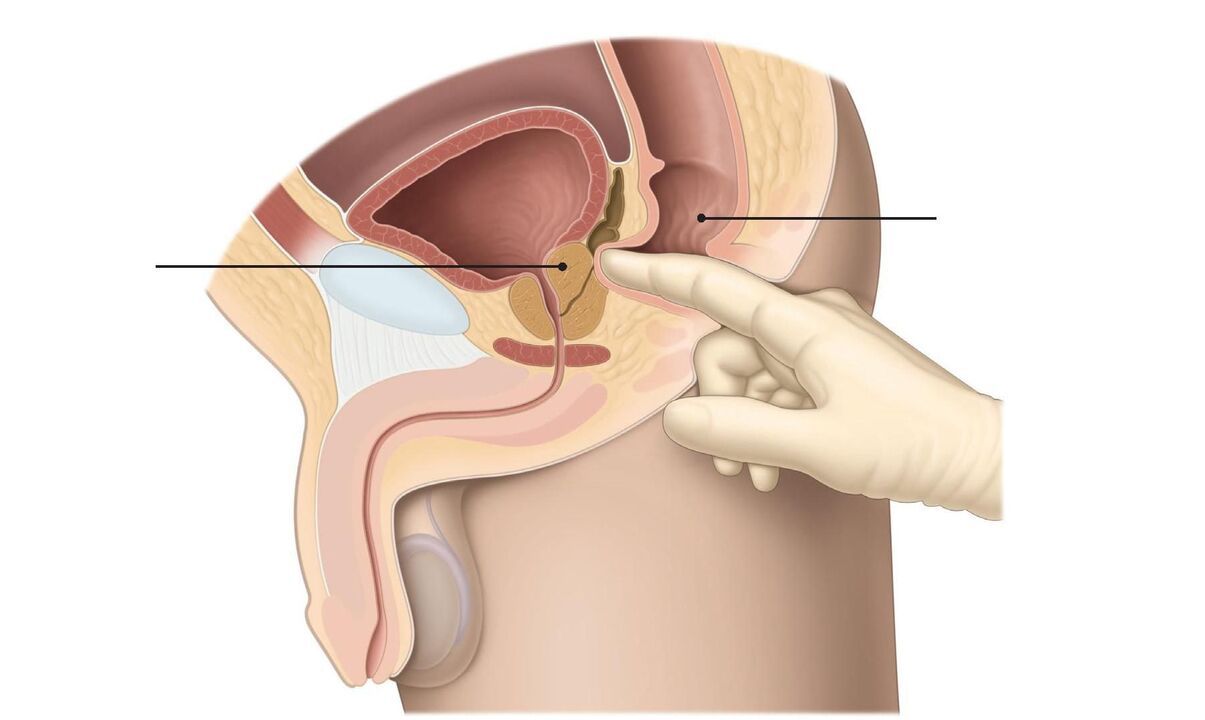
One of the oldest methods, transrectal massage of the prostate gland, according to modern research, has no proven effectiveness.
Non-specific treatments
Non-specific methods of prostatitis treatment include:
- hirudotherapy;
- therapeutic fasting;
- acupuncture;
- diet according to the Ostrovsky method;
- alkalinization of the body using the Neumyvakin method.
We strongly recommend that you discuss with your doctor all non-traditional methods of prostatitis treatment.
Surgical treatment
Surgical methods are used in complex and urgent cases:
- for the drainage of purulent abscesses, which are removed by laparoscopic methods through a puncture;
- in case of difficulty urinating due to damage to the urinary tract;
- with a large volume of the affected area;
- with a significant number of stones in the body of the gland.
Stones and sclerotic tissue are removed using endoscopic methods.In case of a large affected area or multiple stones, prostate resection is used.
Transurethral resection is also effective for bacterial prostatitis.In this way, the risk of relapse can be reduced.
Folk remedies
Folk remedies for the treatment of prostatitis are unlikely to be effective on their own, but in combination with medication and physiotherapeutic methods they may be applicable.These include: beekeeping products, decoctions of plants and seeds, tinctures of garlic, ginger, beaver stem, fresh vegetables, pumpkin seeds.
In acute cases of the disease, you should consult a doctor and in no case should you self-medicate!If a purulent abscess bursts, death is possible.
Suppositories for prostatitis
When treating prostatitis, rectal suppositories are much more effective than tablets, simply because the rectum is much closer to the prostate, which means that the medicine will work faster.
The composition of drugs for the treatment of prostatitis can be completely different;they are prescribed to solve a particular problem.
- Antibacterial agents are particularly effective for prostatitis caused by chlamydia.
- Painkillers are used for symptomatic treatment;relieve pain well.
- Immunostimulants help improve blood circulation, relieve swelling and are used in complex therapy.
- Herbal medicines have a mild effect.They, like candles in bee products, are used as an addition to the main treatment.
- Ichthyol-based compounds promote blood flow in the area of the intestinal mucosa, which accelerates the mitigation of inflammatory processes and slightly improves immunity.
- Enzyme-based products prevent the formation of scar tissue.It is recommended to take it as part of complex therapy with antibiotics, anti-inflammatories and pain relievers.
Auxiliary drugs
For the symptomatic treatment of prostatitis in men, for example, to relieve pain during urination, you can also take antispasmodics, which relax smooth muscles and thus quickly relieve pain.
Overall health is promoted by blood-thinning and anti-inflammatory dietary supplements based on bee products, pumpkin seed oil and palm fruit extracts.
Diet and lifestyle
For the treatment of prostatitis, a proper, balanced diet and a healthy lifestyle are very important.Food should not contain spicy, fried, salty or pickled foods.In acute cases, alcohol is strictly prohibited.
Food should contain enough fiber to prevent constipation.The protein content should be reduced.It is recommended to supplement the diet with herbs, ginger and pumpkin seeds.
Consequences of untreated prostatitis
Even if the symptoms of prostatitis have not appeared for a long time, it is necessary to undergo regular examination by a urologist.Incompletely healed prostatitis can be accompanied by the formation of calcifications, which will then have to be removed together with the gland.Experts are convinced that there are no other ways to remove or disperse stones.
In addition, pathogenic microorganisms can migrate to neighboring organs, causing inflammation.Advanced prostatitis can cause the development of prostate adenoma and cancer.
Prognosis and prevention
Acute prostatitis is a disease that has a marked tendency to become chronic.Even with adequate timely treatment, chronic prostatitis results in more than half of patients.Recovery is not always achieved, however, with correct and stable therapy and following the doctor's recommendations, it is possible to eliminate unpleasant symptoms and achieve long-term and stable remission in a chronic process.
Prevention consists in eliminating risk factors.It is necessary to avoid hypothermia, alternate sedentary work with periods of physical activity and eat regularly and with nutritional value.Laxatives should be used for constipation.One of the preventive measures is the normalization of sexual life, since excessive sexual activity and sexual abstinence are risk factors in the development of prostatitis.If symptoms of a urological or sexually transmitted disease appear, you should immediately consult a doctor.